
Fix the health crisis
The public health system is in crisis. Emergency room overcrowding is the worst it has been in at least 40 years and hundreds of people a day can't get help. There aren't enough ambulances to get to those needing critical care. Paramedics, nurses, doctors, allied and other healthcare workers are being asked to try to hold the system together. Burnout is rife and thousands have already quit. The real wages of hospital workers are going backwards. We need to urgently overhaul the system and provide the required funding to increase hospital capacity, improve ambulance response times, boost health worker numbers and increase wages in the sector.
What we think
- Every person is entitled to universal and timely access to comprehensive, high-quality healthcare.
- Healthcare should not be run for profit. Medical and pharmaceutical care and associated research should not be privately owned or operated on a for-profit basis.
- Our health is influenced by social, cultural, political, economic and environmental factors. Healthcare must be preventive, holistic, and underpinned by an understanding of the social context affecting presentations of ill-health.
We’ll fight to
Hospitals
- Immediately increase the wages of healthcare workers by at least 2.5 percent above inflation, and again in 2028.
- Boost the number of public hospital beds to at least 3 per 1,000 Victorians.
- Significantly increase the number of nurses, midwives, doctors, allied health and mental health specialists working in the public health system and substantially increase training positions across the sector to allow for a transition to a 32-hour working week with no loss of pay.
- Establish and improve staff-to-patient ratios across all of the public sector, properly enforce them and empower workers to trigger reviews into workloads.
- Pay wages to student and trainee nurses, paramedics and other healthcare professionals completing placements.
- Expand the ambulance fleet to reduce wait times.
- Remove Ambulance Victoria membership requirements, making ambulance services free for everyone.
- Fully fund at-home care where medically appropriate and beneficial to the patient’s wellbeing.
- Re-establish the Victorian Infectious Diseases Hospital.
- Build new public hospitals in growth corridors, regional locations and other areas of need.
- Immediately ban private hospitals from charging for emergency department access and treatment.
- Transition private hospitals to public ownership.
- Abolish parking fees for hospital staff, patients and visitors.
Community and primary health
- Advocate for increased Commonwealth funding for Medicare and the Pharmaceutical Benefits Scheme to extend full coverage over dental, Telehealth and mental health services and prescriptions.
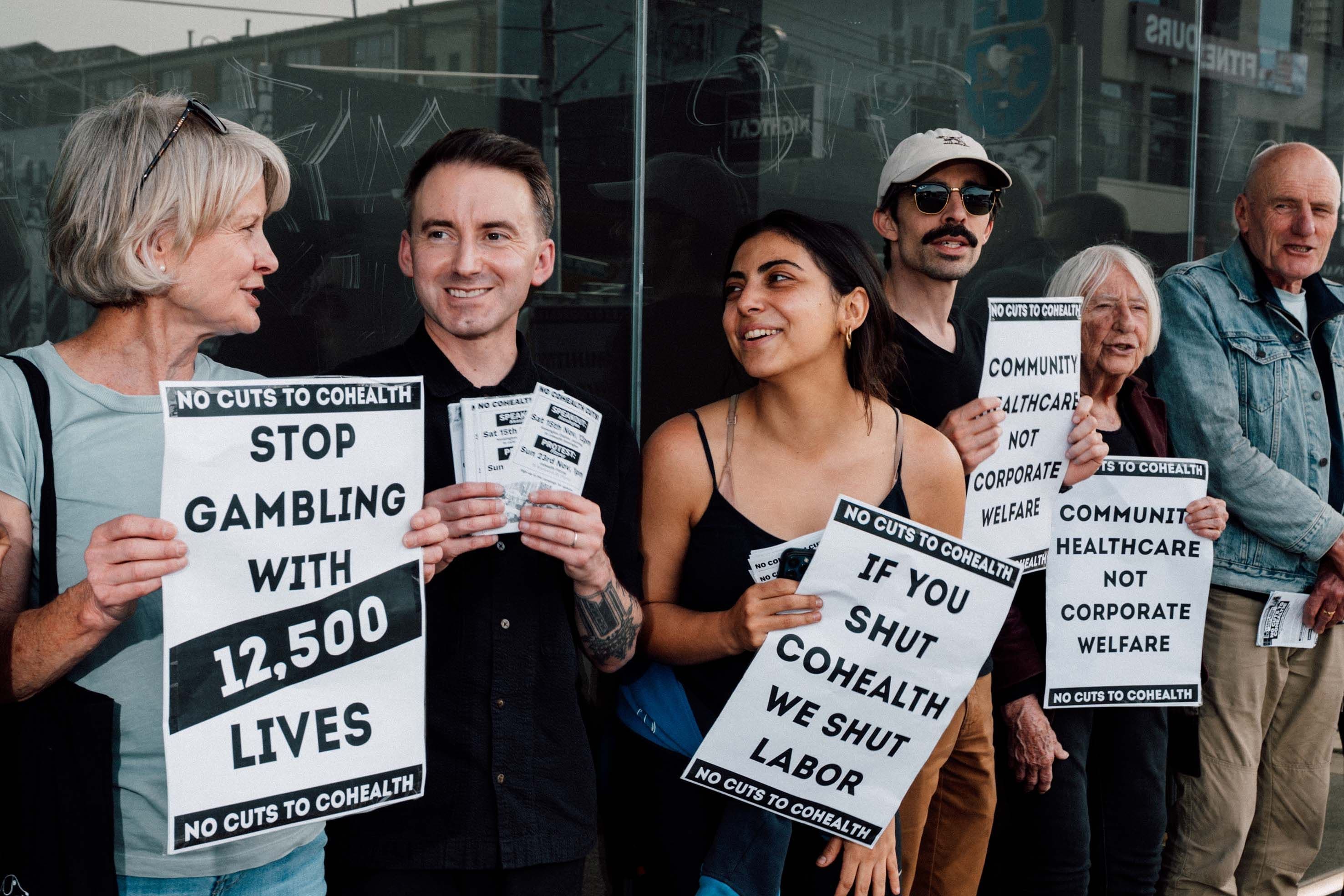
- Establish dedicated, indexed and recurrent public funding for community health organisations.
- Expand and further establish public community health centres across metropolitan and regional Victoria that will provide free access to:
- In person and Telehealth GP consultations
- Nurse Practitioners who can prescribe medicine
- Dental care
- Allied health services, including medical imaging, pathology, physical therapy etc.
- Optometry
- Reproductive, gender affirmation and sexual health services, including free access to abortion
- First Nations health checks and services.
- Expand and centralise state-funded mental health services and provide free access to therapists, psychologists, psychiatrists, mental health clinicians, lived experience workers, crisis support and community outreach.
- Increase funding for specialist primary, secondary and tertiary mental health services in Victoria, including funding for Transforming Trauma Victoria, aiming to create a specialist Trauma and Dissociation services.
- Fund local councils to build and refurbish sports and recreation facilities, including gyms, pools and local sporting clubs, and provide free or low-cost access to community sport and fitness programs as preventative healthcare.
- End the reliance on episodic substitutes like Urgent Care Centres. Any urgent care model must be embedded within, and accountable to, existing community health services- not imposed as a parallel system that fragments care and drains resources.
Reverse privatisation
- Establish public quarantine facilities to cope with future pandemics.
- Establish a state-owned pharmaceutical company with the capacity to manufacture medicines, medical supplies and vaccines.
- Introduce price controls to reduce the amount of money charged by private contractors, specialists, hospitals and insurance funds for services in Victoria.
- Ban the outsourcing of public healthcare services to private actors. For state run services, reverse outsourcing to private contractors and bring services under public control.
- Increase public funding for medical and pharmaceutical research and require all research funded by the state government to be unpatented and publicly available at no cost.