
Police, prisons and human rights
Victoria has a comparatively low crime rate, and the city of Melbourne consistently ranks in the top ten of global safe cities indices. Yet the growth of the prison population far outpaces general state population growth. This is the result of longer prison sentences and persistent increases in the number of people detained who are pre-trial or on remand. It includes increases in the number of women, Aboriginal and people of colour being imprisoned.
Racist and punitive policies have caused a spike in imprisonment, at the same time as the number of offenders per capita has trended downwards over the last decade.
The ‘law and order’ policies promoted by big business, media and their politicians seek to criminalise poverty and marginalisation, and simultaneously scapegoat people of colour and the poor and people with disabilities and/or mental health challenges for social ills, diverting public anger away from the systemic causes created by capitalism.
The crimes of companies and politicians causing growing inequality and marginalisation are left unpunished — wage theft, financial speculation, tax evasion, developer profiteering, real estate fraud and so much more.
Victorian Socialists will implement economic and social policies that address the causes of crime, and replace punitive justice with rehabilitative and restorative approaches wherever possible. We aim to gradually reduce reliance on prisons as social conditions improve and community-based forms of justice become more effective.
Our social justice policies would massively reduce crime, including: Universal housing; secure and well paid employment; properly funded public education; universally accessible and preventive healthcare (including mental health and drug and alcohol support); and a massive expansion of community services (such as neighbourhood houses, youth centres etc). The diversion of public money to running prisons takes away from funding for such services, and from programs that help people to deal with social alienation and to break the cycles of criminal offences.
We’ll fight to
Justice and sentencing
- Raise the age of criminal responsibility to 16.
- End all mandatory sentencing provisions.
- Implement the general approach recommended by the Human Rights Law Centre for ending the crisis of imprisonment in Victoria.
- Decriminalise begging and review the Summary Offences Act to identify other similar ’crimes’ to be repealed.
- Keep people out of prison by fixing Victoria’s punitive sentencing and bail laws, including overhauling Victoria’s bail system to prevent the unnecessary incarceration of vulnerable and disadvantaged people:
- Removing the requirement for accused people to prove why they should be released, and shifting the burden onto the prosecution to justify why someone should be locked up.
- Establishing a clear legal presumption in favour of bail for all offences; bail should only be denied if there is an immediate and identifiable risk to a person’s safety, a serious risk of witness interference, or a demonstrable risk of fleeing the jurisdiction.
- Mandating that a person cannot be remanded in custody for an offence that is unlikely to result in a prison sentence, preventing minor, non-violent offenders from cycling through the prison system.
- Reform the parole system to help people leave prison and re-enter the community:
- Increase funding for parole support programs and social services for parolees.
- Guarantee access to public housing and suitable supported accommodation for parolees upon release.
- Take the parole system out of the hands of Corrections Victoria and reform it so that it upholds natural justice and supports parolees.
- Increase funding for the Victorian Aboriginal Legal Service, Melbourne Activist Legal Support, the Human Rights Law Centre and other community legal services that cater to marginalised, oppressed or economically disadvantaged communities.
- Instate full political rights for those serving sentences, including the right to vote and the right to stand as candidates.
- Impose quotas on senior judicial appointments, ensuring that those from wealthy backgrounds are not over-represented.
- Introduce or strengthen criminal penalties for corporations and wealthy individuals whose business activities have caused harm to individuals, to society or to the environment.
- Create and properly fund a Criminal Case Review Commission similar to that operating in other jurisdictions to investigate miscarriages of justice.
- Strengthen the penalties for wage theft including imprisonment of corporate executives.
Police
Redirect police funding
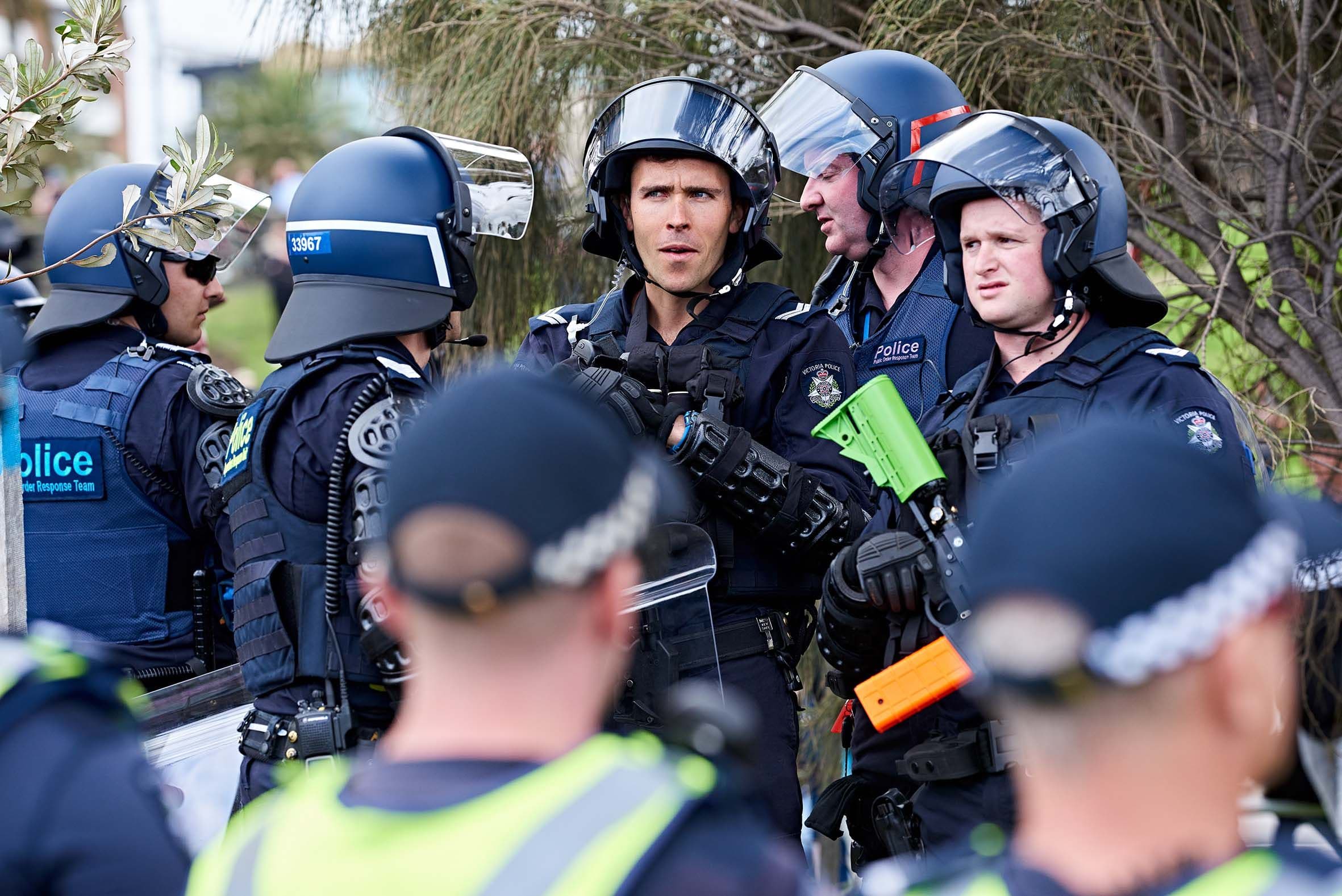
- Reverse all funding increases to Victoria Police over the last decade and redirect into social welfare spending.
- Develop a plan to progressively de-fund the police and increase funding to community based safety initiatives, mental health and social support services.
Disarm the police
- Take all military style weapons and hardware out of police hands.
- End police use of so-called non-lethal weapons, including capsicum spray.
- Disarm police officers on patrol.
Increase operational accountability
- Scrap police designated area powers and declarations, which give Victorian police unaccountable and enhanced powers to stop, search, and direct individuals without needing a warrant or reasonable suspicion of an offence.
- Introduce a system of receipting, requiring police officers to complete a form and issue a receipt every time they stop, or stop and search, someone.
- Oppose AI-based and algorithmic policing and surveillance, and reject all technologies that automate systemic inequalities, violate civil liberties, and erode procedural fairness.
- Strengthen penalties for police found to have acted in an abusive or misogynistic way towards women or who have been transphobic or homophobic.
- Immediately dismiss without pay all police and corrections officers responsible for black deaths in custody, police shootings or other violent conduct.
- End racialised policing and establish a black deaths in custody investigative unit.
- Immediately suspend without pay police officers charged with an indictable offence.
- Increase sentences for police officers convicted of an indictable offence and make being a serving police officer an aggravating factor in sentencing guidelines.
- Remove the requirement for police to consent to diversion.
Stop police investigating themselves
- Complaints against the police should not be referred to the Victoria Police Professional Standards Command for investigation.
- Establish a new, independent and properly funded police ombudsman that can rigorously investigate all complaints made against the police.
- Implement the recommendations of the Royal Commission into Police Informants.
- Launch a Royal Commission into Policing and Police Corruption.
- Fundamentally restructure the Victorian Violence Reduction Unit to ensure that it is a properly funded unit doing real work on prevention and early intervention, and not a framework for discredited ’community policing’ approaches that entrench police surveillance and presence in the lives of young and other marginalised people.
- Strengthen agencies tasked with investigating and prosecuting criminal business activities, environmental crimes and crimes against First Nations peoples or culture.
Prisons
- Implement all the recommendations of deaths in custody inquests.
- Ban the building of new prisons and reallocate to public housing the budget for prison expansion.
- Reverse the privatisation of Victoria’s prisons.
- Make employment voluntary for prisoners and paid at Award rates.
- Strengthen independent authorities that can investigate allegations of abuse by prisoners, prison staff and others, and grant them more powers to suspend abusive prison workers and shut down prison facilities that have a systematic culture of abuse.
- Increase access to effective health, welfare, education and cultural and disability services available to people in prison, operated by community providers funded by Medicare, not by existing inadequate prison health services.
- Introduce in-prison, independent community-run legal and advocacy units that support prisoner rights and can monitor and intervene in cases of abuse by authorities, including unwarranted lockdowns, discrimination and other abuses.
- End the incredibly harmful use of solitary confinement.